
Content
Stephanie, the production manager, is collecting data for the November budget. The production manager is responsible for estimating the costs for rent expense, cost of goods sold, and electricity. A merchandising business is a business entity that purchases finished inventory products from the business that manufactures the inventory with the intent to resale it and make a profit. A merchandiser makes a profit by marking up the inventory and selling it at a higher price to its customers. Retail stores such as Walmart and Target are examples of merchandising operations. Managerial accounting is concerned with classifying, analyzing, and reporting data for internal decision making.
- Cost is a topic of major importance in economics because it is an indispensable tool of the economy.
- In our day-to-day lives, we often come across the concept of cost.
- Under this concept, stability in asset prices while recording is achieved.
- Hence, it is clear that for increasing the QQ quantity of ‘X’ commodity, RS quantity of ‘Y’ commodity will have to be reduced.
- Let’s consider the example of a business that purchases a building worth $100,000 in cash.
Even then, the allocation of overhead and fixed costs is difficult since the cause and effect relation between resources and different users is difficult to determine. Since many economic evaluations use accountancy cost data, the results should be treated with some caution. In practice, very few studies attempt to estimate the opportunity costs of drugs, relying instead on prices. Cost classification is the process of separating costs into different categories.
Book Value of an Asset
Advisory services provided by Carbon Collective Investment LLC (“Carbon Collective”), an SEC-registered investment adviser. When average costs are constant, as opposed to situations where material costs fluctuate because of scarcity issues, marginal cost is usually the same as average cost. There are several different ways to account for depreciation but, in general, depreciation is treated as a loss and is expensed throughout the asset’s useful life. Process your expenses and manage your company assets with Debitoor invoicing software. Only those costs and benefits that differ between alternatives are relevant in a decision.

Under the historical cost concept, the commercial land purchased five years ago at $200,000 will have to be reported in your company’s balance sheet at $200,000. That cost that induces any particular factor of production to remain in its existing use is known as opportunity cost. In other words, opportunity cost is the sacrifice of that alternative commodity or commodities, which can be produced with the help of these factors, from which the existing commodity has been produced. Short-run costs are those costs that are concerned with the short-run production of a firm.
What Is the Difference Between Historical Cost and Fair Market Value??
For example, costs of tax, rent, depreciation, etc., remain fixed during the operations of the business and they are considered fixed costs. Fixed costs are costs that do not change with changing amount of production. These costs remain unaltered even if production is increased or decreased. These costs are specifically independent of the business costs of the company in all situations.
Also, when used consistently, the use of historical cost promotes comparability of financial statements. Cost principle is the accounting practice stating that any assets owned by a company will be recorded at their original cost, not their current market value. The purpose of using the cost principle method is to maintain reliable information across financial documents https://www.bookstime.com/articles/cost-principle and provide consistency in verifying an asset’s cost at the time of purchase. Long-run costs are those costs that are concerned with the long-run process of production. In the long run, all the factors of production are variable and even the scale of production can be changed. All the costs during the long run are variable costs and no cost is a fixed cost.
What Is a Historical Cost?
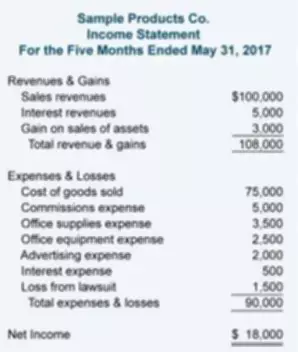
Variable costs, like the costs of labour or raw materials, change with the level of output. A contribution margin income statement is primarily used by internal users, usually management, for planning operations, controlling operations, and making decisions. Like a traditional income statement, the contribution margin income statement reports an organization’s revenue and expenses for a specified period of time. The contribution margin income statement classifies expenses on the basis of cost behavior—variable versus fixed.
- However, under the cost concept, the accounting records will continue to show the value of the building at the cost price of $100,000 less depreciation.
- However, an exception to this rule is the diminution in value that may arise from the depreciation of assets.
- Using cost principle follows the Generally Accepted Accounting Procedures (GAAP), which is established by the Financial Accounting Standards Board (FASB).
The original cost will include every expense that goes into the cost of acquiring an asset and setting it up for use. These include shipping and delivery, set-up cost, training cost, renovation/restoration cost, etc. The historical cost will appear on the balance sheet and would not change based on market expectations of its value. A company can optimally increase units of production to the point where marginal cost equals marginal revenue. The cost principle is also known as the historical cost principle and the historical cost concept. Although the concept of opportunity cost is fundamental, incorrect conclusions can result from difficulties in applying the concept.
Video Illustration 3: Using cost behavior to predict future costs
This minimum charge is fixed because it does not change depending on actual usage. This part of the electric bill is variable since it depends on usage. The total electric bill has both a fixed and variable component so it is considered a mixed cost. For example, if an individual buys a certain brand’s car instead of the previously chosen one, the price of the previously chosen car would be the opportunity cost.
Ohio Senate bill aimed at combatting perceived liberal bias could cost colleges millions – cleveland.com
Ohio Senate bill aimed at combatting perceived liberal bias could cost colleges millions.
Posted: Tue, 06 Jun 2023 17:46:00 GMT [source]
Net realizable value is the amount of cash that the company expects to receive when these receivable accounts are paid. If the records are kept on a fair value basis, this would create serious concerns for the company as each member of the accounting department will https://www.bookstime.com/ value the assets differently. This will increase subjectivity and reduce the consistency and reliability of the financial statements. It will also be highly inconvenient for those companies that prepare their financial statements more frequently such as monthly.
Definition and Examples of Cost Principle
It is the minimum remuneration that a firm should get in order to remain in an industry. It is over and above the explicit and implicit cost of an individual firm. It is a motivational factor for a firm to continue its functions. Variable costs, on the other hand, are costs that vary with the amount of production and sale. With an increase in production, these costs may go up while production is decreased, they may come down.
- All other costs and benefits can and should be ignored as irrelevant.
- Described above is a fair overview of the major defining factors of the concept of costs.
- Historical cost is the cash or cash equivalent value of an asset at the time of acquisition.
- We believe that sustainable investing is not just an important climate solution, but a smart way to invest.
- According to the cost principle, transactions should be listed on financial records at historical cost – i.e. the original cash value at the time the asset was purchased – rather than the current market value.